
Hyper-Personalization as a Competitive Advantage in 2026

Hyper-Personalization as a Competitive Advantage in 2026 January 14, 2026 1:40 pm Adil Gouri Retail in 2026: Winning Through Hyper-Personalized Experiences Walk into any retail brand’s ecosystem today—online or offline—and the expectation is already clear. Customers don’t want to be recognized as a segment anymore; they want to be understood as individuals. By 2026, hyper-personalization isn’t a “nice-to-have” experience layer—it’s the baseline customers silently demand, and the differentiator brands quietly compete on. Retail is operating in an environment shaped by fragmented journeys, shrinking loyalty, and relentless comparison. Consumers move fluidly between mobile apps, stores, marketplaces, social platforms, and customer support channels. At the same time, retailers are juggling volatile demand, thin margins, rising acquisition costs, and pressure to convert first-time buyers into long-term advocates. Personalization, once driven by simple recommendation engines, now needs to work in real time, across every touchpoint. The gap today isn’t intent—it’s execution. Many retailers still rely on disconnected systems for commerce, marketing, service, and inventory. Customer data sits in silos, campaign logic is rule-heavy, and personalization often stops at “people like you also bought.” The result is generic experiences powered by complex back-end operations that struggle to scale or adapt quickly to changing customer behavior. This is where Salesforce’s evolution becomes strategically relevant. Salesforce is no longer just a CRM system of record; it’s becoming a system of intelligence. With Salesforce Data Cloud unifying first-party data in real time, Einstein AI interpreting behavior patterns, and tight integration across Commerce Cloud, Marketing Cloud, and Service Cloud, retailers can design experiences that adapt dynamically—without relying on brittle custom logic. Personalization moves from static campaigns to continuous, context-aware decisioning across channels. Consider a mid-sized omnichannel retailer preparing for a peak sales season. Historically, their promotions were calendar-driven and product-focused. By centralizing customer profiles in Data Cloud and applying Einstein-driven insights, they begin tailoring offers based on browsing behavior, store visits, inventory availability, and past service interactions. A customer who abandoned a cart online doesn’t just receive a reminder email—they might see a personalized in-store offer, a relevant product bundle, or proactive service outreach if friction is detected. The experience feels natural, not engineered. Another critical shift retailers are navigating is the balance between personalization and trust. As data volumes grow, customers are becoming more conscious of how their information is collected and used. Hyper-personalization in 2026 will only succeed when it is transparent, compliant, and value-driven. Salesforce’s emphasis on trusted AI, consent-driven data models, and governance through Data Cloud allows retailers to personalize responsibly—delivering relevance without crossing the line into intrusion. Equally important is organizational readiness. Hyper-personalization isn’t powered by technology alone; it requires alignment between marketing, merchandising, service, and IT teams. Salesforce enables this alignment by providing a shared customer language through Customer 360, real-time insights accessible across roles, and automation that reduces dependency on manual handoffs. Retailers that invest in this operational maturity are better positioned to move faster, experiment safely, and scale personalization without adding complexity. The benefits compound quickly. Retailers see higher conversion rates, improved inventory turnover, and stronger customer lifetime value because engagement feels timely and relevant. Operational teams gain clarity instead of complexity, since personalization logic is driven by unified data and AI recommendations rather than manual segmentation and duplicated workflows. Most importantly, trust improves—customers are more willing to share data when the value exchange is obvious. Looking ahead to 2026, hyper-personalization will mature beyond marketing into a full experience ecosystem. AI-driven decisioning, predictive service, autonomous commerce flows, and real-time experience orchestration will define retail leaders. Salesforce’s roadmap aligns closely with this shift, focusing on scalable data foundations, responsible AI, and cross-cloud intelligence that grows with the business—not against it. If you’re evaluating how Salesforce fits into your digital retail roadmap, we help organizations validate personalization strategy, design scalable architectures, and turn CRM investments into measurable, customer-centric outcomes. Latest Post 14Jan BlogsTechnology Hyper-Personalization as a Competitive Advantage… Hyper-Personalization as a Competitive Advantage in 2026 January 14, 2026 1:38 pm Adil Gouri Retail… 14Jan BlogsTechnology Salesforce’s Next Frontier: Agentic AI… Salesforce’s Next Frontier: Agentic AI & Self-Executing Workflows January 14, 2026 11:50 am Darpan Karanje… 14Jan BlogsIndustry Building Real-Time Customer 360 with… Building Real-Time Customer 360 with Salesforce Data Cloud January 14, 2026 11:21 am Laxman Gore…
Salesforce’s Next Frontier: Agentic AI & Self-Executing Workflows
Salesforce’s Next Frontier: Agentic AI & Self-Executing Workflows January 14, 2026 11:50 am Darpan Karanje Turning AI Intelligence into Real-Time Business Impact Most enterprise tech leaders know automation can shave hours off routine work, but what if your systems could think ahead rather than just follow instructions? The conversation is shifting — from task automation to intelligent orchestration that anticipates outcomes, adapts in real-time, and triggers action without human prompts. In an era where generative AI became table stakes, the next battleground is agentic intelligence — AI that autonomously enacts business processes and workflows that traditionally required manual oversight. Technology companies are uniquely pressured to innovate faster, integrate complex stacks, and deliver personalized customer and employee experiences at scale. Yet many still wrestle with operational silos: CRM teams manually escalate support cases, product ops chase cross-cloud handoffs, and sales leaders juggle fragmented views of opportunity risk. Even as workflows grow in complexity, the expectation for real-time execution and insight has never been higher. This intensifies the need for systems that do more than react — systems that act. Despite advancements in low-code automation and Einstein AI insights, a gap persists. Current automation capabilities generally require human orchestration — approvals, triggers, or monitoring to close the loop. Organizations with high-velocity operations still face bottlenecks when transforming insight into action. That’s the core challenge: connecting predictive intelligence with self-directed execution so that meaningful work doesn’t stall at the edge of human intervention. Salesforce is positioning itself at the forefront of this shift by infusing agentic AI into its platform and advancing self-executing workflows. Rather than just suggesting the next best action, agentic capabilities within Salesforce promise context-aware agents that can evaluate priorities, determine the optimal outcome, and execute multi-step processes across clouds — from automating cross-service case routing to initiating contract renewals with contextual approvals. This evolution aligns with Salesforce’s broader strategy of turning intelligence into impact rather than intelligence into recommendations alone. Consider a tech support organization handling high-severity incidents. Today, triggers might alert a manager and create a task for review. With agentic AI and self-executing workflows, the system could automatically assess problem severity, reassign engineers, initiate customer notifications, schedule escalations, and document remediation steps — all without a single manual click. The result is a closed-loop resolution engine that learns from outcomes, improves decision paths, and accelerates time-to-resolution without burdening staff with routine governance tasks. The benefits resonate across performance and culture. Teams waste less time on coordination, leaders gain confidence that high-priority work proceeds reliably, and customers receive faster, more consistent responses. By reducing operational friction, organizations unlock higher innovation capacity — internal talent can focus on strategy and creativity rather than chasing clicks and approvals. The measurable impact includes reduced cycle times, higher SLA compliance, and improved employee satisfaction because the system handles what it can, freeing humans for what only they should. Looking ahead, agentic AI and self-executing workflows are more than feature buzzwords — they represent a new maturity curve in digital operations. As AI models become better at understanding context, intent, and business policies, the frontier will move toward systems that not only respond intelligently but decide and act with bounded autonomy. This evolution will challenge organizations to rethink control frameworks, governance, and trust models — demanding clarity on when and how AI should act on behalf of people and the business. If your organization is evaluating how Salesforce’s emerging AI and automation stack fits into your tech strategy, exploring agentic capabilities and self-executing workflows now can accelerate your path to operational resilience. Aligning human expertise with autonomous execution is no longer a futuristic ideal — it’s becoming a competitive necessity. Latest Post 14Jan BlogsRetail Salesforce’s Next Frontier: Agentic AI… Salesforce’s Next Frontier: Agentic AI & Self-Executing Workflows January 14, 2026 11:49 am Darpan Karanje… 14Jan BlogsIndustry Building Real-Time Customer 360 with… Building Real-Time Customer 360 with Salesforce Data Cloud January 14, 2026 11:21 am Laxman Gore… 19Dec BlogsRetail Why Banks Are Replacing Legacy… Why Banks Are Replacing Legacy CRMs for Omni-Channel Relationship Insight December 19, 2025 11:56 am…
Building Real-Time Customer 360 with Salesforce Data Cloud
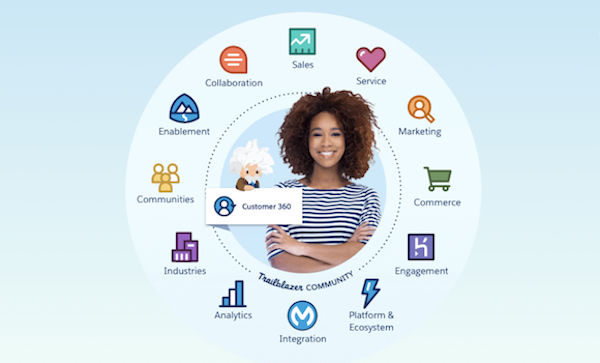
Building Real-Time Customer 360 with Salesforce Data Cloud January 14, 2026 11:21 am Laxman Gore Powering Intelligent, Real-Time Experiences with Unified Customer Data in Salesforce Most organizations believe they understand their customers—until the moment they need to act in real time. A customer abandons a cart, opens a service case, or responds to a campaign, and suddenly teams realize the data they rely on is delayed, fragmented, or stuck in another system. The gap isn’t a lack of data; it’s the inability to unify, interpret, and activate it fast enough. Across industries, this challenge is becoming universal. Enterprises operate with dozens of systems—CRM, ERP, marketing platforms, mobile apps, data warehouses, and third-party tools—each capturing valuable signals. Customer expectations, however, have shifted toward immediate, contextual experiences. Whether it’s retail, financial services, healthcare, or manufacturing, customers expect every interaction to feel informed by their latest behavior, not last week’s snapshot. The problem is that traditional CRM models weren’t designed for real-time scale and diversity. Data arrives in batches, identities don’t always match, and teams end up building workarounds with ETL jobs, custom integrations, or point solutions. The result is operational drag: delayed personalization, inconsistent reporting, and frontline teams working with partial context while customers assume the company “should already know this.” Salesforce Data Cloud addresses this gap at an architectural level. It is built to ingest streaming and batch data from Salesforce and non-Salesforce sources, normalize it into a unified data model, and resolve identities using deterministic and probabilistic matching. Under the hood, Data Cloud leverages a scalable lakehouse architecture, real-time ingestion pipelines, calculated insights, and a harmonized profile that stays continuously updated. Crucially, this unified profile is not static—it’s natively connected to Sales Cloud, Service Cloud, Marketing Cloud, Experience Cloud, and Einstein, allowing data to move from insight to action without custom middleware. Consider a cross-industry scenario where a customer browses products on a mobile app, contacts support later that day, and then receives a follow-up offer. With Data Cloud, behavioral events from the app stream in real time, update the customer profile, and recalculate engagement metrics instantly. When the service agent opens the case, they see recent activity without waiting for an overnight sync. At the same time, Einstein can trigger a contextual recommendation or suppression rule in marketing based on the same unified data—no manual reconciliation required. The benefits of this approach extend beyond personalization. Organizations gain a single source of truth that is analytics-ready, AI-ready, and action-ready. Data latency drops from days to seconds, identity accuracy improves across channels, and teams spend less time maintaining integrations and more time optimizing experiences. Most importantly, Customer 360 stops being a reporting concept and becomes an operational capability embedded into daily workflows. Looking ahead, real-time Customer 360 will be the foundation for autonomous and AI-driven experiences. As generative AI and predictive models rely more heavily on fresh, trustworthy data, platforms like Salesforce Data Cloud become strategic infrastructure rather than optional add-ons. Enterprises that invest now are not just unifying data—they’re preparing for a future where every customer interaction is intelligent, immediate, and connected. If you’re evaluating how Salesforce Data Cloud fits into your digital roadmap, we help organizations design real-time data architectures, align Customer 360 strategies with business goals, and turn unified data into measurable outcomes across teams. Latest Post 14Jan BlogsIndustry Building Real-Time Customer 360 with… Building Real-Time Customer 360 with Salesforce Data Cloud January 14, 2026 11:19 am Laxman Gore… 19Dec BlogsRetail Why Banks Are Replacing Legacy… Why Banks Are Replacing Legacy CRMs for Omni-Channel Relationship Insight December 19, 2025 11:56 am… 15Dec BlogsRetail Loyalty 3.0: Salesforce’s Predictive Personalization… Loyalty 3.0: Salesforce’s Predictive Personalization Shift in Retail December 15, 2025 2:41 pm Darpan Karanje…